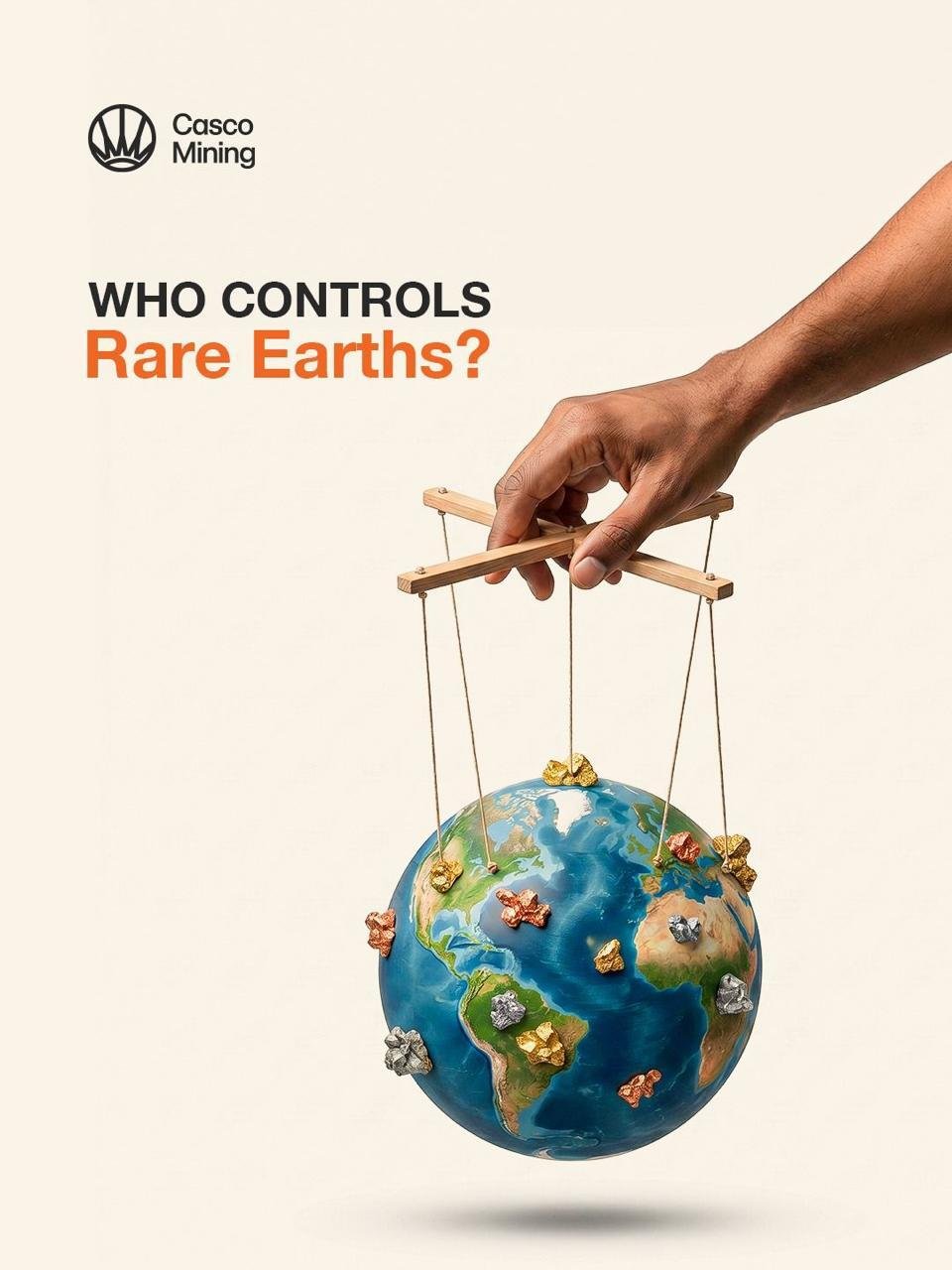
In 2024, China accounted for approximately 60% of global rare earth mineral production. However, its real dominance lies in processing, where it controlled 91% of the world's refined rare earth output, according to the International Energy Agency (IEA).
This concentration explains much about today's global economy. Behind electric vehicles, wind turbines, advanced electronics, and defense technologies lies a highly sensitive supply chain, much of which is controlled by a limited number of players.
Rare earth minerals are not truly rare in terms of geological abundance. The greater challenge lies in separating, refining, and converting them into high-value industrial materials. This is where geology becomes geopolitics.
According to the IEA's 2025 report, the share of rare earth refining concentrated in the top three producing countries increased from 82% in 2020 to 86% in 2024, with China maintaining its dominant position.
China's competitive advantage is especially evident in the post-mining stages. Control over separation, refining, and manufacturing delivers far greater strategic influence than simply possessing mineral reserves.
In October 2025, China introduced new export controls on technologies and products related to rare earth minerals, further demonstrating how these materials have become an instrument of geopolitical influence.
Future demand—driven by clean energy, artificial intelligence, and defense technologies—will continue to grow faster than alternative supply chains can be developed. This places increasing pressure on governments to strengthen industrial policies and accelerate strategic investment.
Achieving a more balanced global supply chain will require long-term investment, technology transfer, and the development of domestic processing capabilities. Mineral resources alone are no longer sufficient.
At CASCO, we believe the opportunity lies in building integrated capabilities that combine exploration, processing, and strategic partnerships to create greater resilience in an increasingly complex geopolitical landscape.
The map of rare earth dominance is no longer defined by mines alone. It is shaped by processing facilities, advanced technology, and access to global markets. The defining question is no longer who owns the minerals—but who has the capability to transform them into lasting industrial and economic power.